Shop
Furniture
Tables, chairs, shelving, storage, and display cabinets — built from solid hardwoods to last a lifetime.
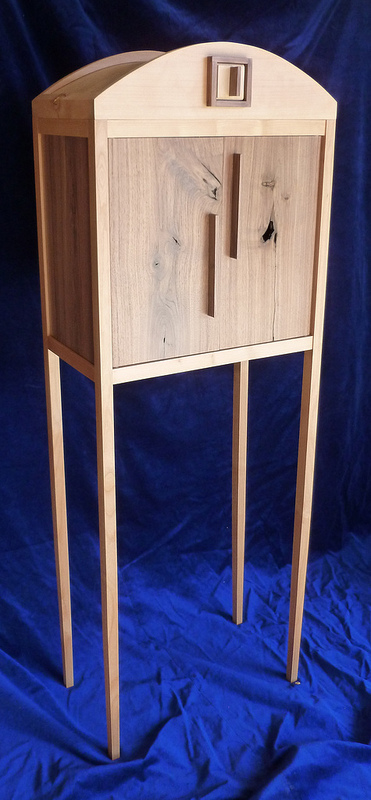
Kabinet Krenov
James Krenov (1920 – 2009) was a master woodworker and cabinet builder. His designs and furniture emphasize what he called 'honest' — clean lines and light to no finish.
This is my first homage.
It is alder with walnut panels and doors finished in a clear urethane. There is a secret latching mechanism hidden in the trim.
Inside are two shelves. Yours is, of course, customizable in dimension, trim and internal configuration.
This homage stands about six feet tall, is about 12 inches deep and approximately 20 inches broad.
Naturally, your space and specifications will dictate the size and configuration of your custom built cabinet.
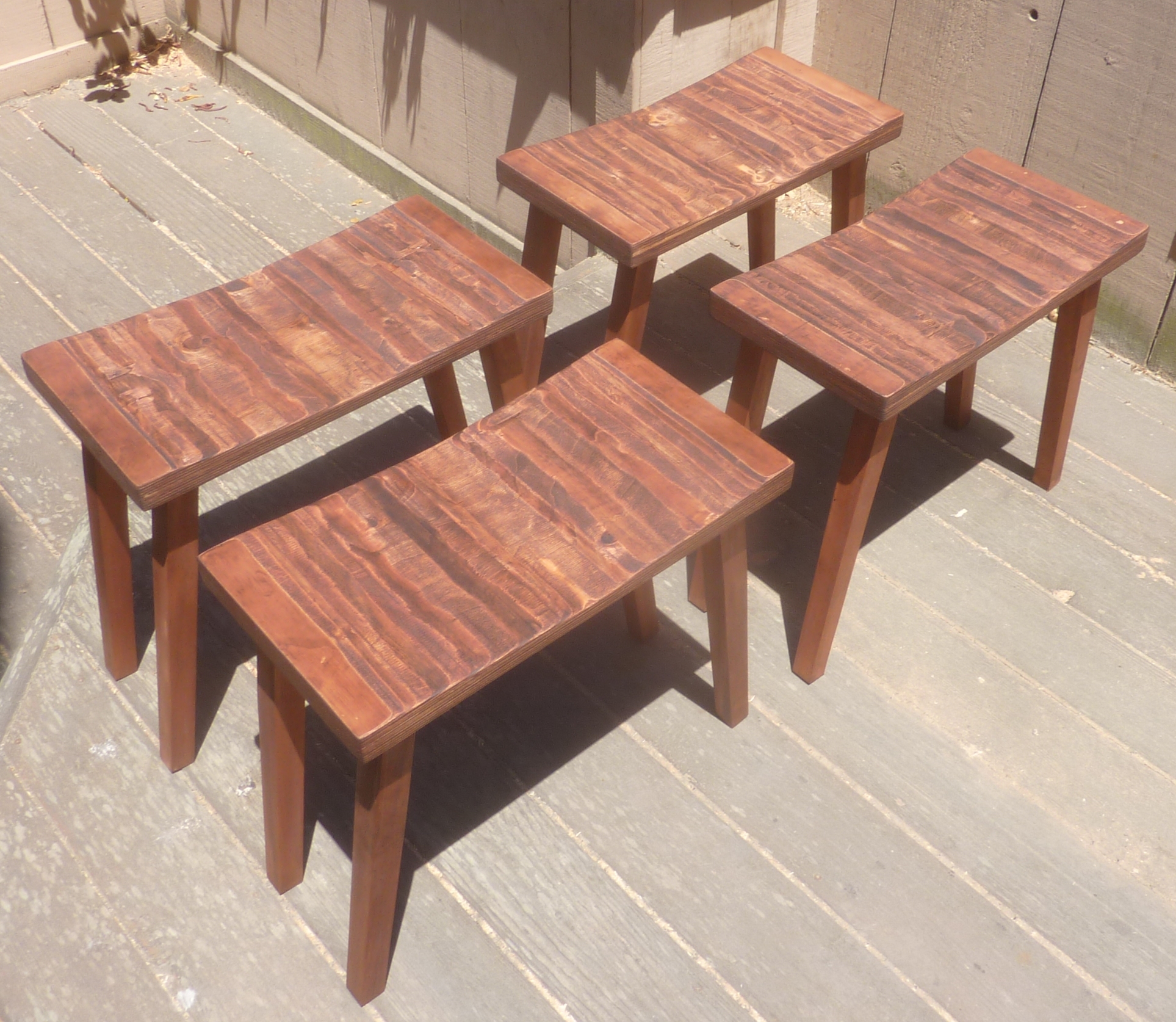
Splay Stools
These stools were a commission based upon a product in a catalog. I built a prototype using plywood for the seat.
The seat surface was scooped out both to 'friendly-up' the look and make the stool more comfortable. In doing so, the layers of the plywood were exposed, like geologic strata.
The ripped surface was not intended to reflect the production set of stools, but the client liked the look.
The legs are splayed outward at 10 degrees and are mortise and tenon joined. The finish is red oak with about 12 coats of urethane to make the seat surface smooth.
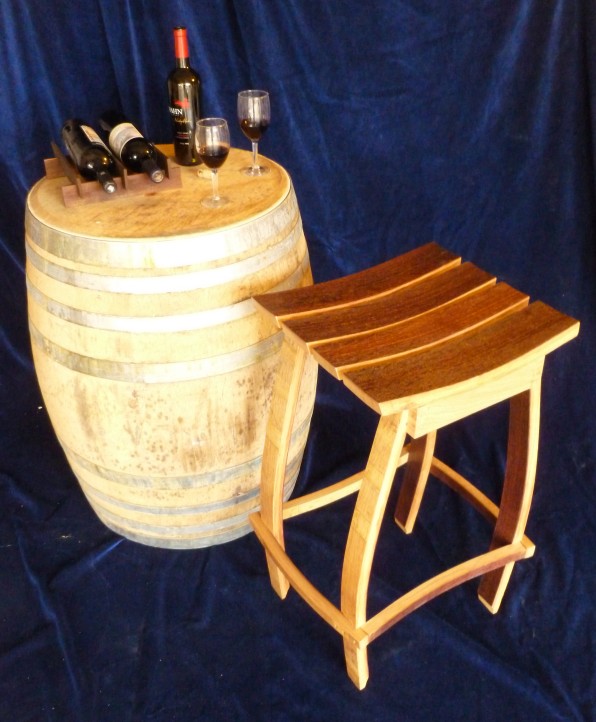
Barrel Stave Stools
Oak wine barrels are fascinating, not just because of the nectar of the gods they provide us, but their construction and shape are beguiling: All curves and roundness, even the flat barrel tops and bottoms are circular.
Alas, after a few fermentations, these marvelous constructs are consigned to the burn pit.
But not here at JohnsonArts.
A local vintner suggested that I take two of his surplus barrels and make a stool.
This I did.
The Rubicon was opting for non-barrel staves for the all-important apron.
Stools are similar in structure to tables: there are legs, there is an apron, and there is a top, the usable surface. It is the apron to which the legs and the top are attached and formed the central, structural element.
This was the only element of the stool NOT formed from the barrel, and it proved a sound choice.
What followed was me simply looking at the staves and following their forms, with the exercise of a bit of artisanal legerdemain, such as deftly shaping the upper ends of the legs to fit flush to the apron with a bit of a lip for solidity.
The foot rails too were purposefully crafted to retain their delicious curvature.
The seat of the stool is wine-side up.
Then, many coats of urethane were applied to render a smooth, gleaming surface, and bring out the natural colours of the oak.
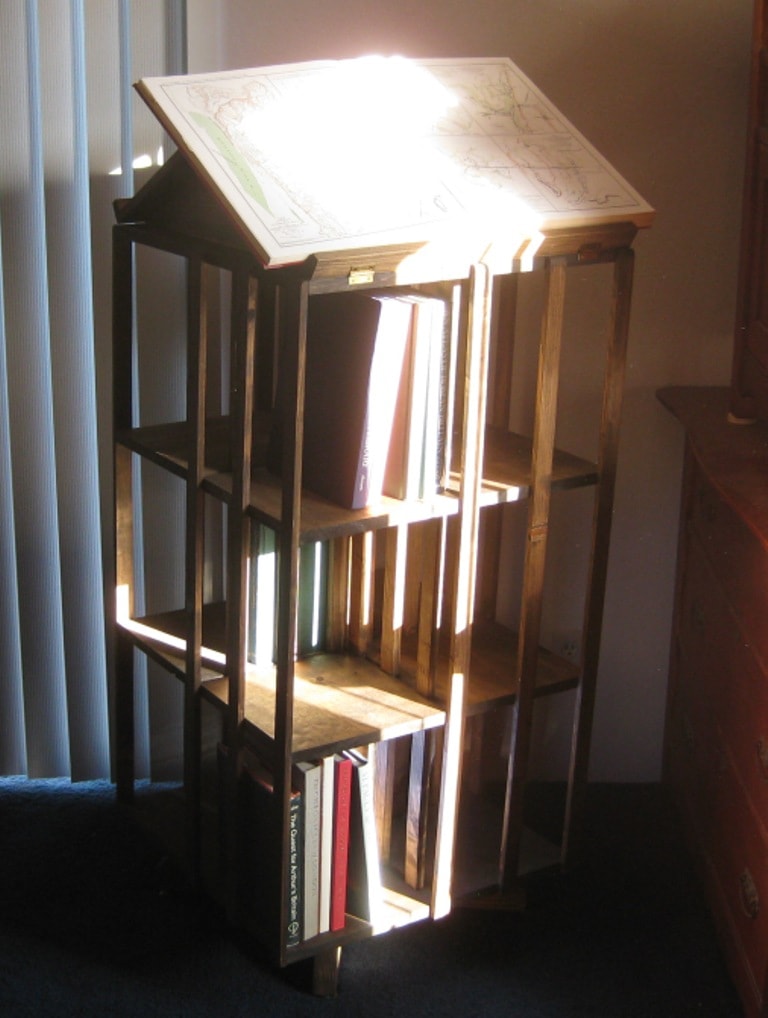
Revolving Bookcase
These revolving bookcases were common, in America, from the late 19th Century into the 20th. And for a good reason: they store books without taking up wall space.
In a diameter of 2 or 2 ½ feet, and depending upon the height, one could store, readily to hand, 12 linear feet of books.
This version is about four feet tall, and includes a double inclined reading stand on the top.
Secret: the angled reading surfaces are hinged and can be lifted to access the concealed chamber beneath.
It will be our little secret when I make one for you.
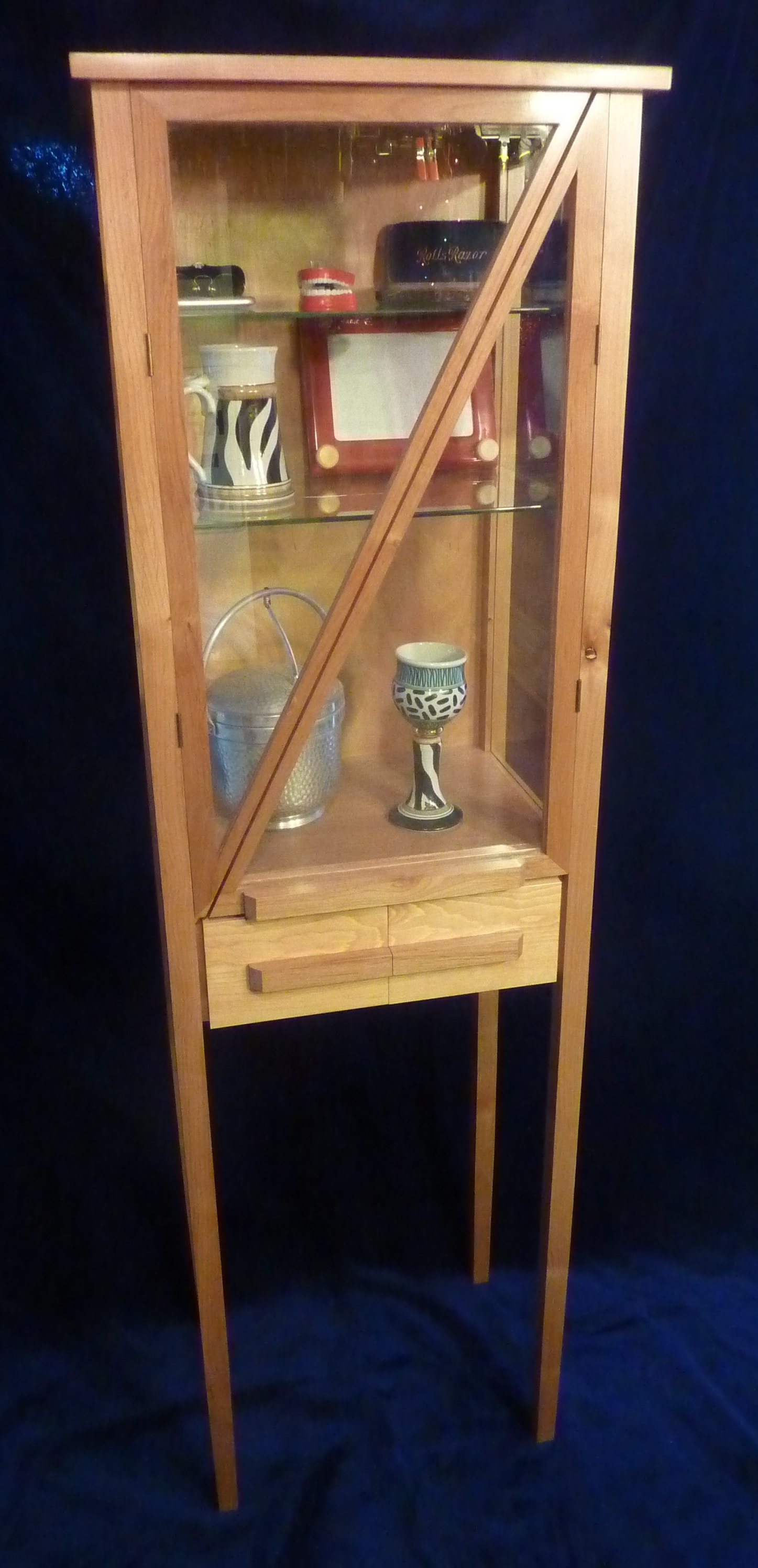
Cabinet Slash
Square or rectangular cabinet doors are fine, but what if you wanted something a bit more edgy? How about Cabinet Slash?
Tabletop display cases are fine for smaller items, such as your glass eye collection, but larger treasures – such as your two dozen kachina's – mean larger cabinets. This cabinet stands about 72 inches, is 12 inches deep and about 18 inches wide.
The sides are glass; the glass shelves are adjustable. There are two drawers beneath for those light sensitive, more private treasures.
This version is mostly alder; the pine parts, such as the drawer fronts and the ply back are tinted with a 1:4 mix of chestnut to natural stain to better match the subtle auburn of the alder. Of course, you can have this made to a different size and configuration and with any wood you wish.
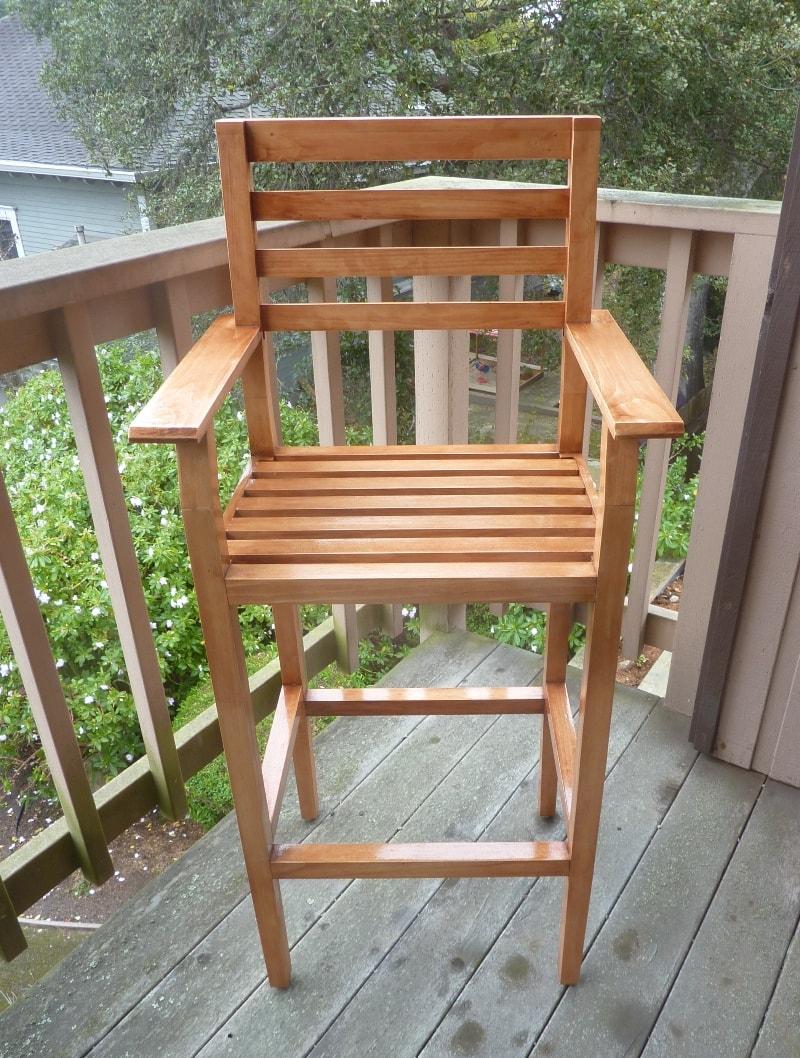
Deck Chair
What's a deck and a view without a deck chair in which to luxuriate? Less without, more with. This with is Port Orford cedar stained cherry and urethane sealed. Yours can be any wood you like, any color you like and sized to your height and comfort.
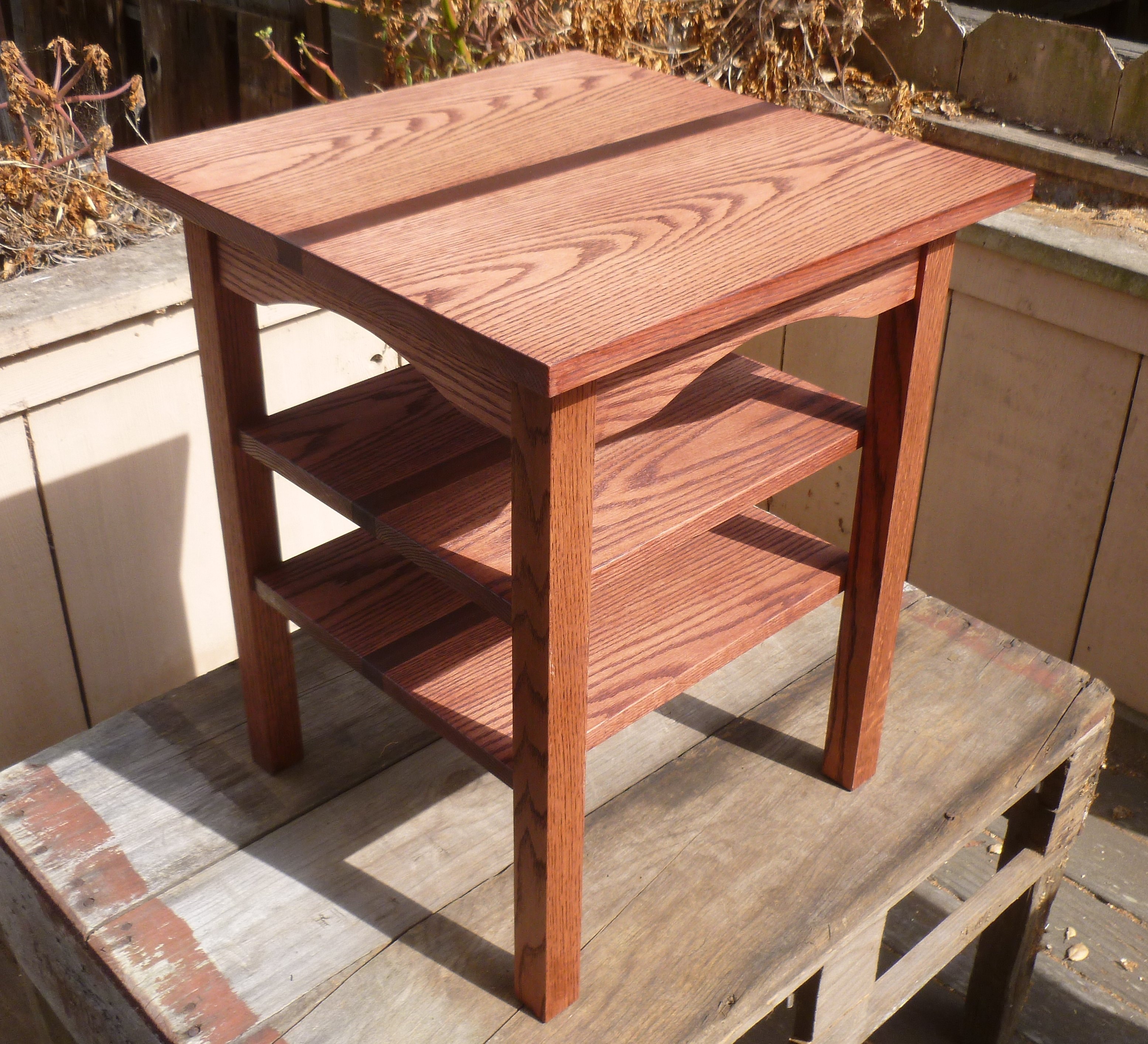
Printer Table
This simple table in oak and redwood solves the question of where to put the printer and its supplies.
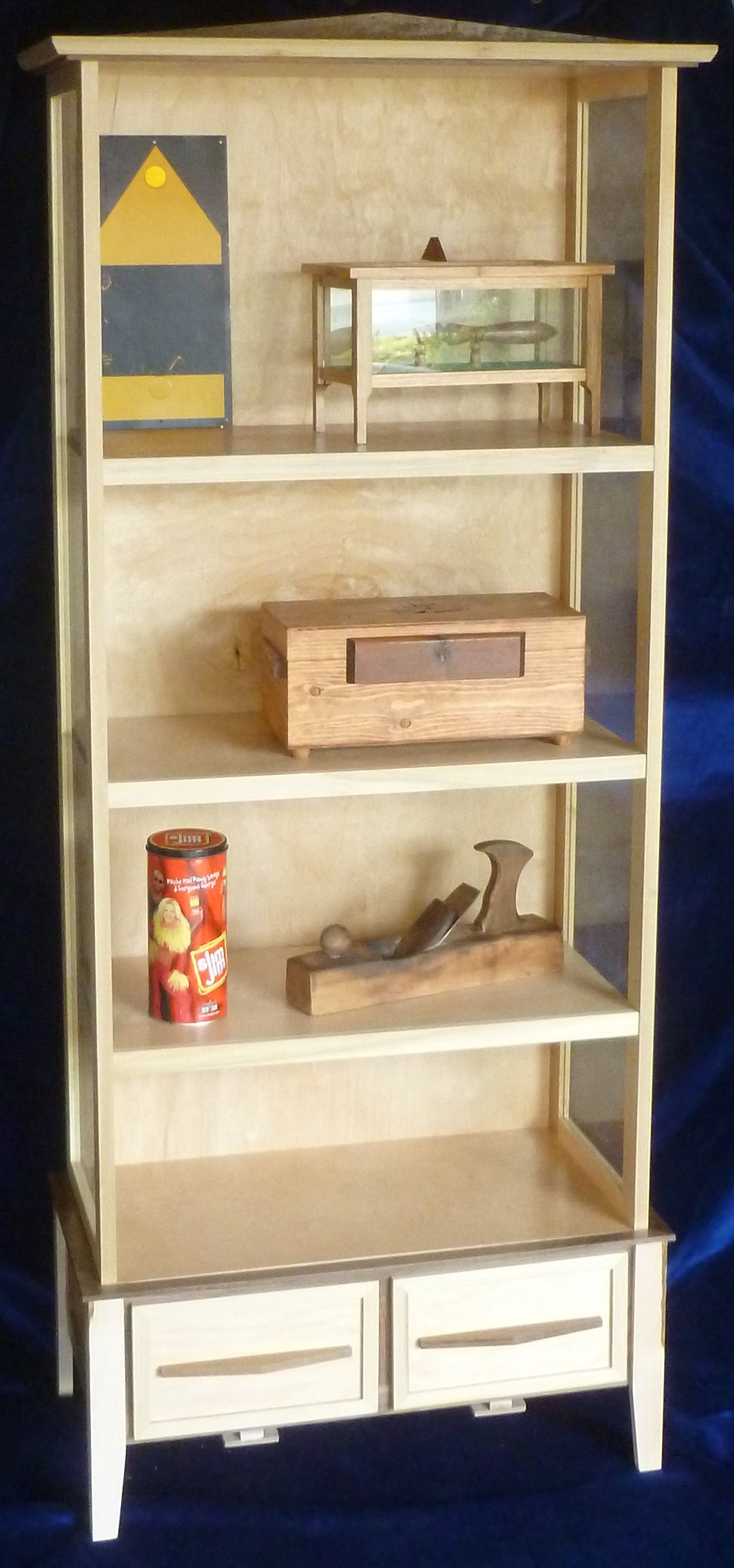
Linenmoire Cabinet
Presented here is a hybrid of a Linen Press, Armoire, and bookcase. A Linen Press is typically a tall cabinet featuring lower drawers and large doors to the upper portion of the case. Armoires may or may not have lower drawers. And some bookcases may have doors.
The genesis of this amalgam was simple: two 5 foot long glass shelves, scavenged at The Dump and loafing around far too long, not earning their keep.
Did I need/want a case housing two, horizontal 5 foot long shelves? No.
What if the shelves became vertical supports for….something.
The something became this case. 77" high x 32" wide x 16 1/2" deep. (1.95m x 82cm x 42cm).
I started with the bottom of the case – the base - because its construction and features – the two drawers held shut by a concealed latching mechanism – were more interesting and challenging than the upper portion of the case.
The base is a simple plywood box open on top with a cut-out front as opening for the two drawers. Circassian walnut formed the trim, front and sides, and also horizontally across the top front and top sides.
The legs are maple, tapered to lighten the form.
The drawers were formed, in the main, of salvaged bamboo flooring and slide on maple runners installed inside the base.
The concealed latching mechanism is a simple lever system. Pressing upward on lever just under the lower front trim retracts a hardwood clothes pin registered (in the at-rest position) against the inside lower lip of each drawer. Once the clothes pin is thus retracted, the drawer(s) can be drawn out.
The upper case is poplar topped with poplar and oak trim. The sides are those glass shelves. The two main challenges were to drill the holes for the shelve supports precisely in each of the four vertical stiles so that the shelves would be level, and to form the stub tenons on the rails which register in the kerfs of the verticals. More fun.
The former was accomplished by using a simple drilling jig where the first hole forms the register (a dowel) in the jig to locate the second and subsequent holes. The stub tenons were made using a tenoning jig on the table saw.
Once the two sides were assembled, they were joined to plywood, top and bottom.
The base was formed so that the upper case would nest into the base – the trim was 3/4" high – which cloaked the nails and screws used to lash the bottom of the upper case to the verticals. The nail and screw holes of the case top were concealed under trim.
Finally, gussets were installed in the base with through holes. These through holes allowed bolts to be passed through the gussets and screwed into threaded inserts installed in the upper case base thus lashing the upper case to the base.
The shelves are plywood with poplar facing which both hides the lamination of the plywood and imparts structural strength to resist horizontal loading.